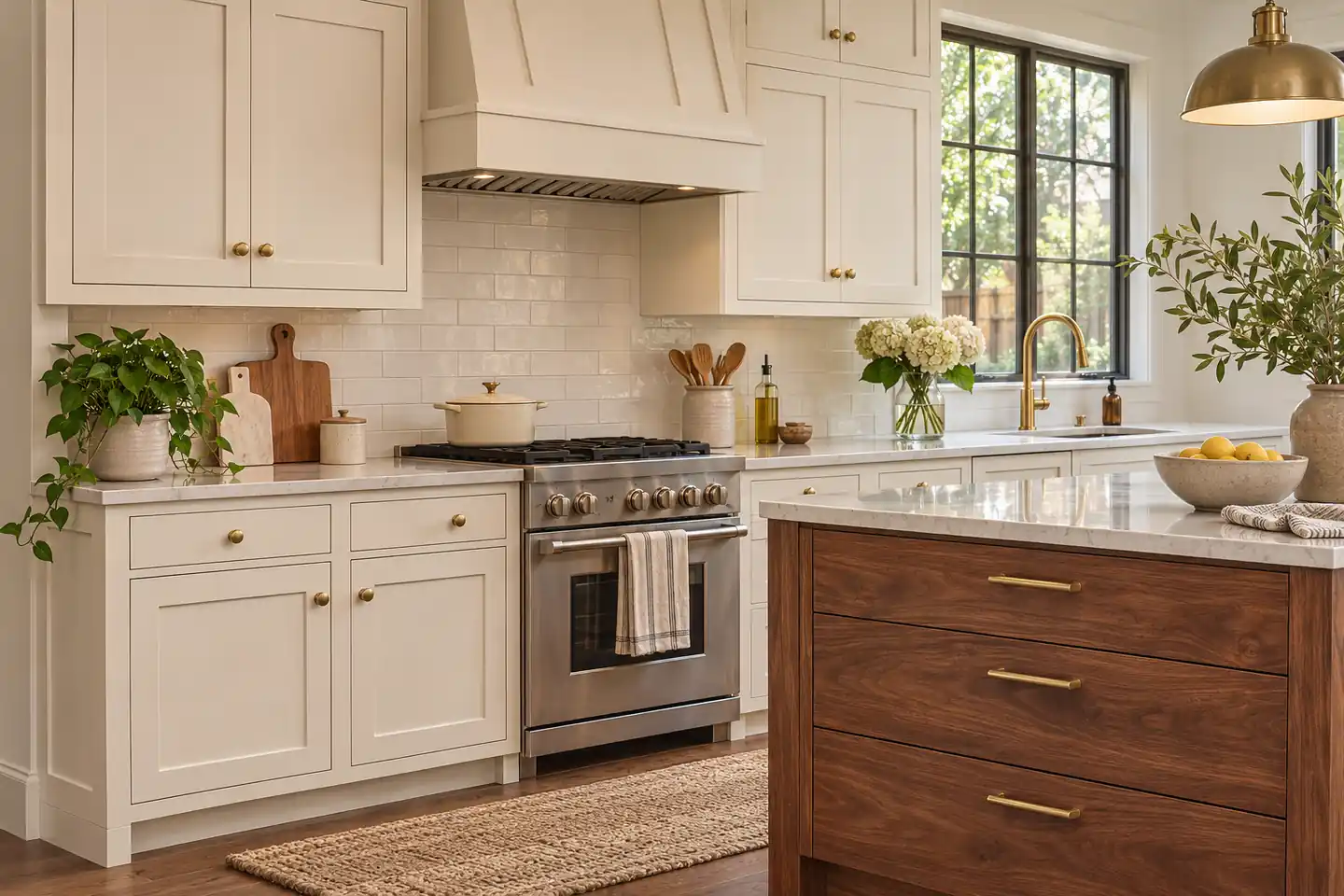
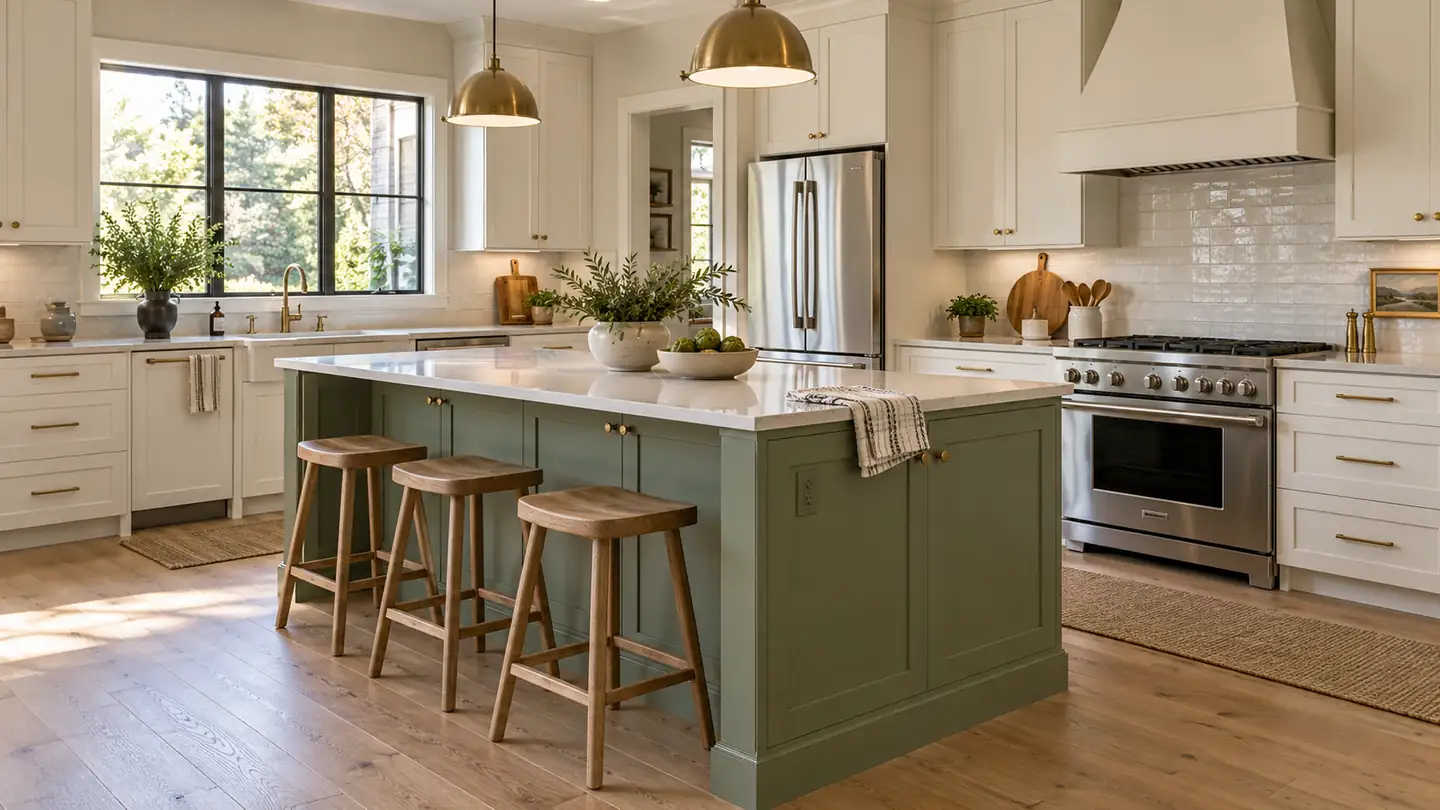
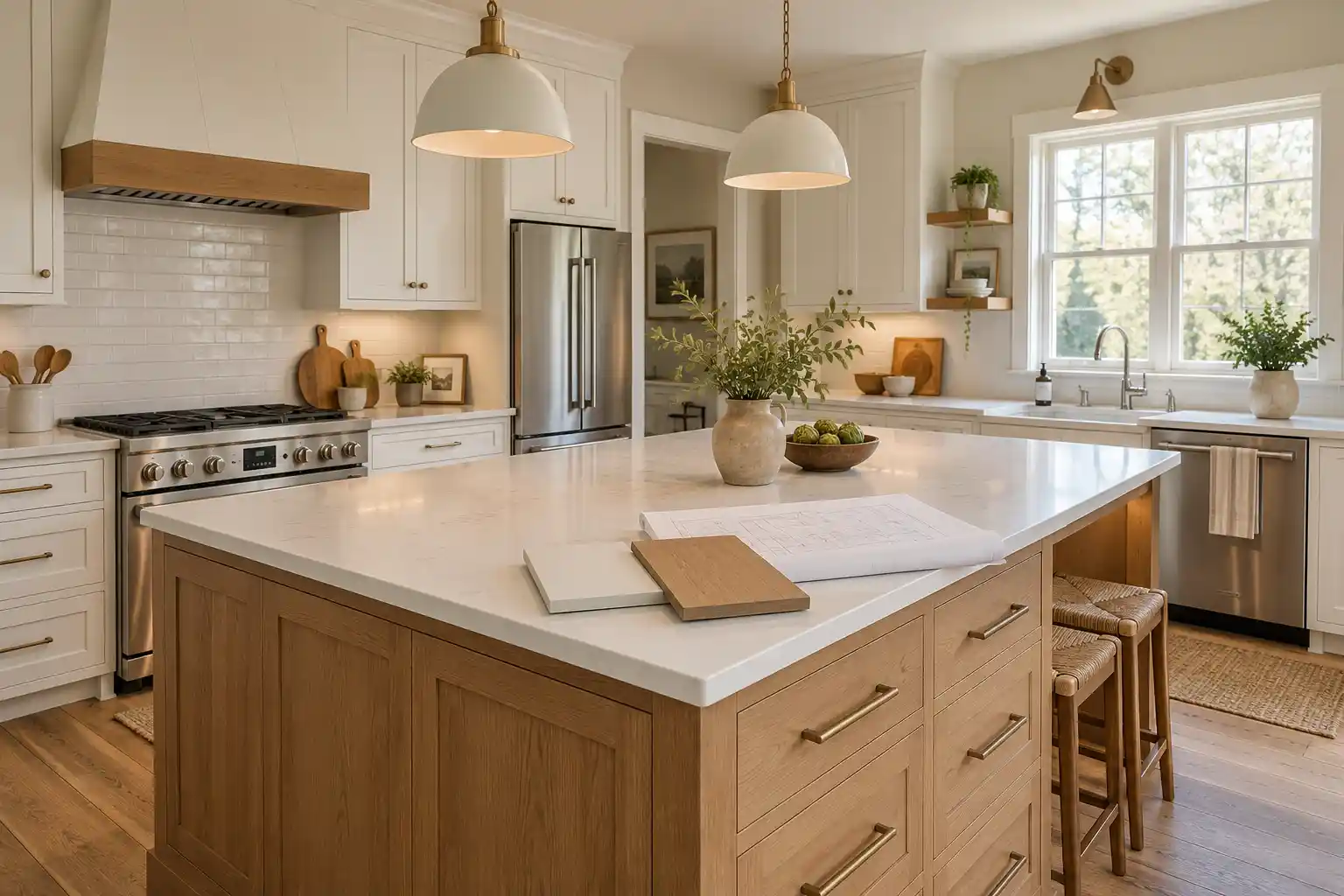
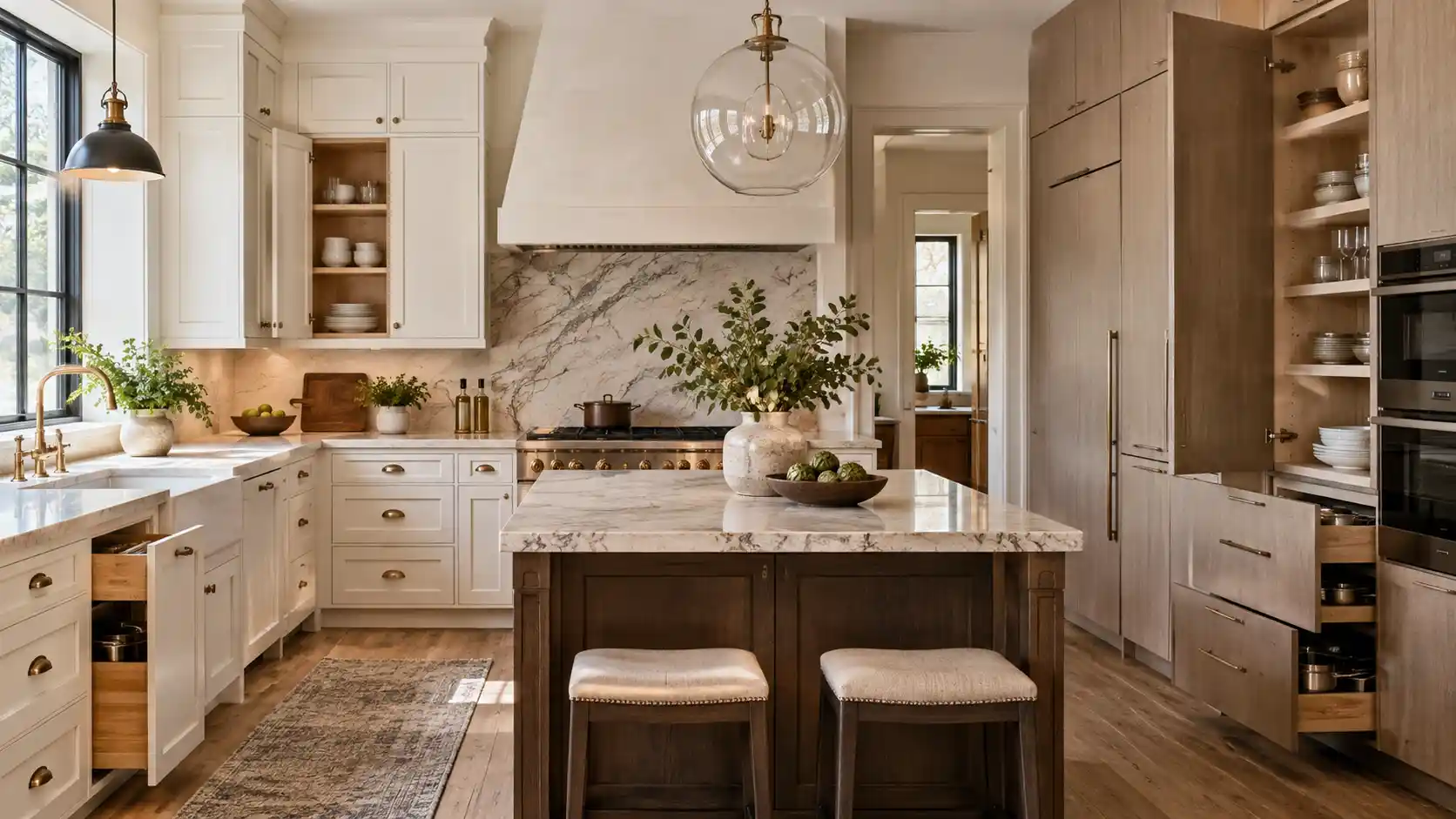
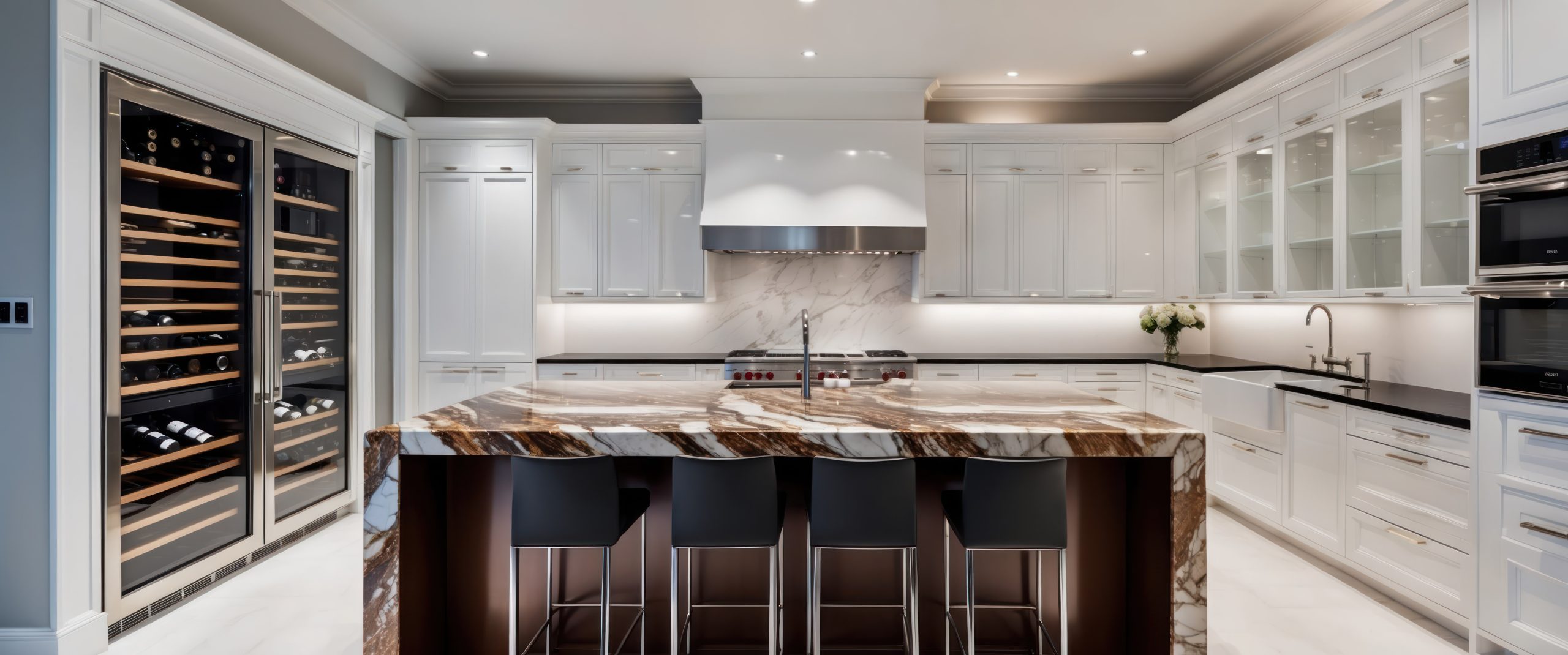
Kitchen cabinet doors and fronts shape the overall appearance of your kitchen. Their style, material, color, and finish influence how the space looks, while their construction affects durability, cleaning, and daily use. Choosing the right combination is an important part of any kitchen renovation.
With different kitchen cabinet door styles, materials, and configurations available, it helps to understand what separates each option. Whether you’re installing new cabinets or replacing existing fronts, this guide covers the essential factors to consider before making your decision.
What Are Kitchen Cabinet Doors and Fronts?
Kitchen cabinet fronts are the visible exterior panels of your cabinetry, including doors and drawer fronts. Cabinet doors are attached to hinges and swing open to provide access to storage, while drawer fronts are attached to sliding drawers.
Both components should complement the cabinet boxes, hardware, countertops, and overall kitchen design. When selecting kitchen cabinets, consider the appearance of the fronts alongside their construction and functionality.
Popular Kitchen Cabinet Door Styles
The door profile determines much of your kitchen’s visual character. Some styles feature clean, simple surfaces, while others include decorative framing and detailed center panels.
Shaker Cabinet Doors
Shaker doors feature a recessed center panel surrounded by a simple frame. Their balanced design works well in traditional, transitional, farmhouse, and modern kitchens.
They are available in painted and wood finishes, making them easy to coordinate with different countertops and hardware. Shaker style kitchen cabinets are particularly suitable for homeowners who want a versatile design without excessive detailing.
Flat Panel and Slab Cabinet Doors
Slab cabinet doors have a smooth, uninterrupted surface without decorative framing. They are commonly used in modern and minimalist kitchens, where clean lines and simple finishes are preferred.
Flat center-panel doors, by comparison, have a surrounding frame but no raised center detail. Both styles can create an understated appearance, although slab doors are generally easier to wipe clean because they have fewer grooves.
Raised Panel Cabinet Doors
Raised panel doors feature an elevated center panel with shaped edges that add depth and decorative detail. They are commonly found in traditional kitchens, particularly those with stained wood cabinetry and classic hardware.
These doors can create a more formal appearance, but their detailed profiles require additional cleaning. Homeowners planning a traditional design can compare different raised panel cabinet doors before selecting a profile.
Recessed Panel Cabinet Doors
Recessed panel doors have a center section positioned below the surrounding frame. Shaker doors are one example, but other recessed designs may include decorative edges or more detailed framing.
This style offers a balance between simple and traditional cabinetry. Recessed panel cabinet doors work particularly well in transitional kitchens where modern and classic elements are combined.
Glass-Front Cabinet Doors
Glass-front doors feature glass panels within a surrounding frame. They are often used for upper cabinets, display sections, or accent cabinetry rather than throughout the entire kitchen.
Clear glass creates an open appearance and displays dishes or decorative items, while frosted glass provides more privacy. However, glass requires regular cleaning, and visible cabinet contents need to remain organized.
Understanding Kitchen Cabinet Door Types
Beyond appearance, cabinet doors differ in how they fit against the cabinet frame. The three main kitchen cabinet door types are full overlay, partial overlay, and inset.
- Full overlay doors cover most of the cabinet frame, creating a continuous appearance with narrow gaps between doors. They are common in contemporary and transitional kitchen designs.
- Partial overlay doors leave more of the cabinet face frame visible. They are often used in traditional framed cabinetry and certain budget-friendly cabinet collections.
- Inset doors sit inside the cabinet frame rather than covering it. This creates a precise, furniture-like appearance but requires accurate measurements and installation to maintain even spacing.
- Door configuration also depends on whether the cabinets use framed or frameless construction. Understanding the differences between framed and frameless kitchen cabinets can help you choose an appropriate door configuration.
How to Choose the Right Cabinet Door Materials
Cabinet door materials affect durability, appearance, maintenance, and price. The best option depends on your preferred finish, kitchen conditions, and budget.
Solid Wood
Solid wood cabinet doors offer natural grain patterns and the ability to be refinished. Maple, oak, cherry, and birch are commonly used for cabinet construction.
Wood works especially well with stained finishes, but it can expand and contract with humidity changes. It is also generally more expensive than many engineered alternatives.
MDF
Medium-density fiberboard (MDF) has a smooth, consistent surface that works well with painted finishes. It does not have natural wood grain, which helps create a uniform appearance.
However, MDF can swell when exposed to moisture through damaged or unsealed surfaces. Proper finishing and edge protection are important for long-term performance.
Wood Veneer
Wood veneer doors use a thin layer of natural wood over an engineered core, such as MDF or plywood. They provide a real wood appearance with greater dimensional stability than some solid-wood constructions.
Veneer is commonly used for contemporary cabinetry, although deep scratches and damaged edges can be difficult to repair.
Laminate
Laminate cabinet doors feature a decorative surface bonded to an engineered core. They are available in solid colors, wood-look patterns, and textured finishes.
They are often easy to clean and suitable for busy kitchens. However, durability depends on the laminate quality, edge treatment, and underlying material.
Thermofoil
Thermofoil cabinet doors typically feature a vinyl covering bonded to an MDF core. They provide a consistent finish and are often available at an accessible price.
Their main limitation is heat sensitivity. Excessive heat near ovens or other appliances can cause peeling or separation if the product is not properly protected.
Choosing Kitchen Cabinet Finishes
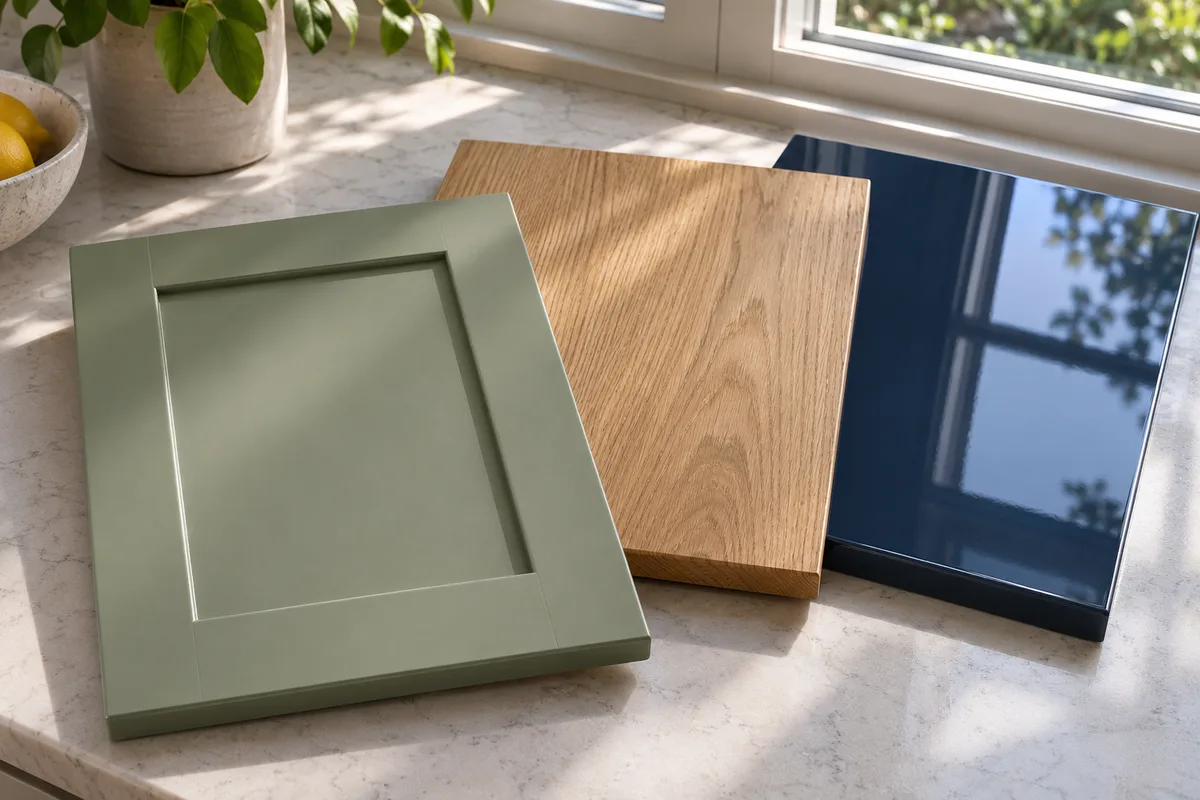
The finish affects how your cabinet doors look under different lighting conditions and how well they coordinate with the surrounding kitchen.
- Painted finishes provide consistent color and are available in white, cream, gray, navy, green, and other shades. They work well with Shaker, recessed panel, and slab doors, although chips and scratches may require touch-ups.
- Stained finishes highlight natural wood grain and are suitable for homeowners who prefer warm, organic textures. The final appearance depends on the wood species and stain color.
- Matte finishes create a soft, low-reflection appearance, while satin finishes provide a subtle sheen. Both can work in modern and traditional kitchens.
- High-gloss finishes reflect more light and create a polished appearance, particularly on slab doors. However, fingerprints and surface marks may be more noticeable.
When comparing kitchen cabinet finishes, consider the color of your walls, flooring, backsplash, and kitchen countertops. Viewing physical samples in your home’s lighting can help prevent color mismatches.
How to Choose Kitchen Cabinet Drawer Fronts
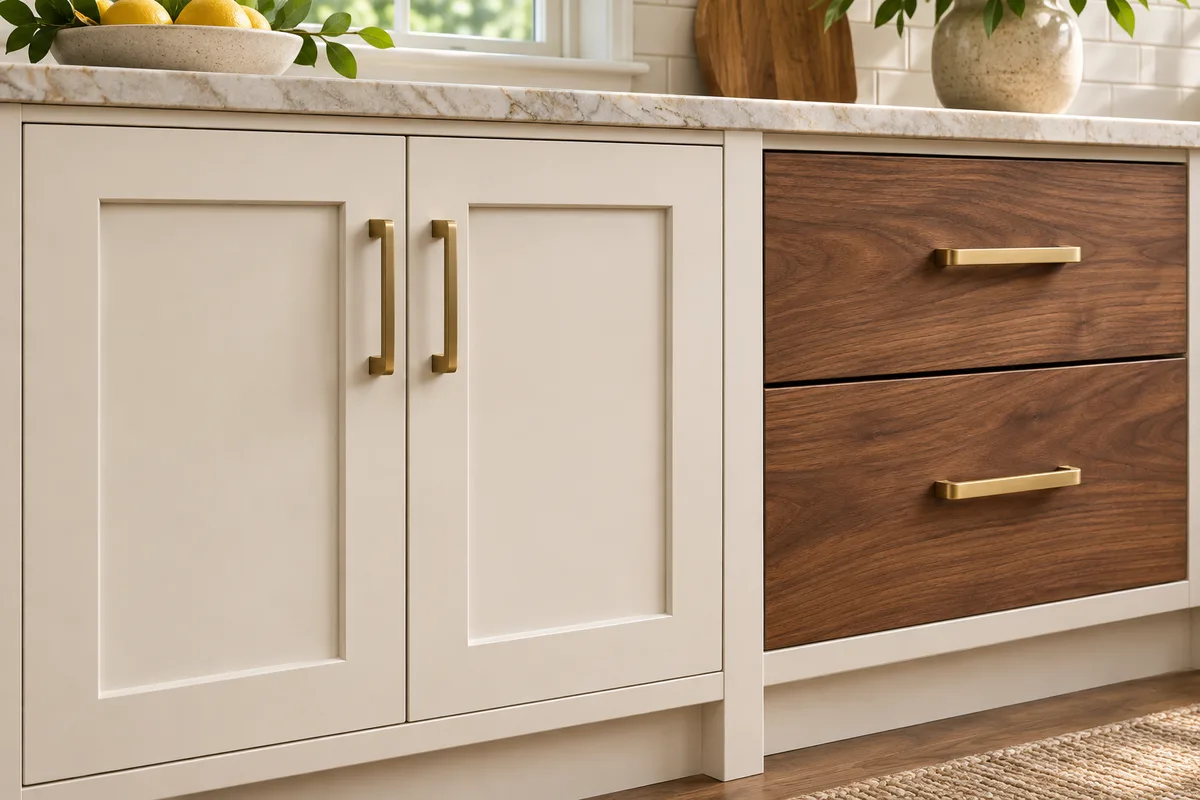
Kitchen cabinet drawer fronts should coordinate with the doors while providing enough room for practical hardware placement. The two common designs are slab fronts and five-piece fronts.
Slab drawer fronts have a plain surface and are often used in modern kitchens. They can also be paired with Shaker doors to create a simpler appearance, especially on narrow drawers.
Five-piece drawer fronts include a frame and center panel similar to framed cabinet doors. They provide a consistent look but may not be suitable for very small drawers because of limited space.
When choosing drawer fronts, check their dimensions, handle placement, and clearance around nearby cabinets and appliances. Consistent spacing and hardware alignment help create a balanced design.
Replacement Kitchen Cabinet Doors vs. New Cabinets
Replacing the doors and drawer fronts can update a kitchen without removing the existing cabinet boxes. However, this approach is only practical when the underlying cabinetry remains in good condition.
When Replacing Cabinet Doors Makes Sense
Replacement kitchen cabinet doors may be appropriate when the existing cabinet boxes are structurally sound, the layout works well, and the main concern is outdated or damaged fronts.
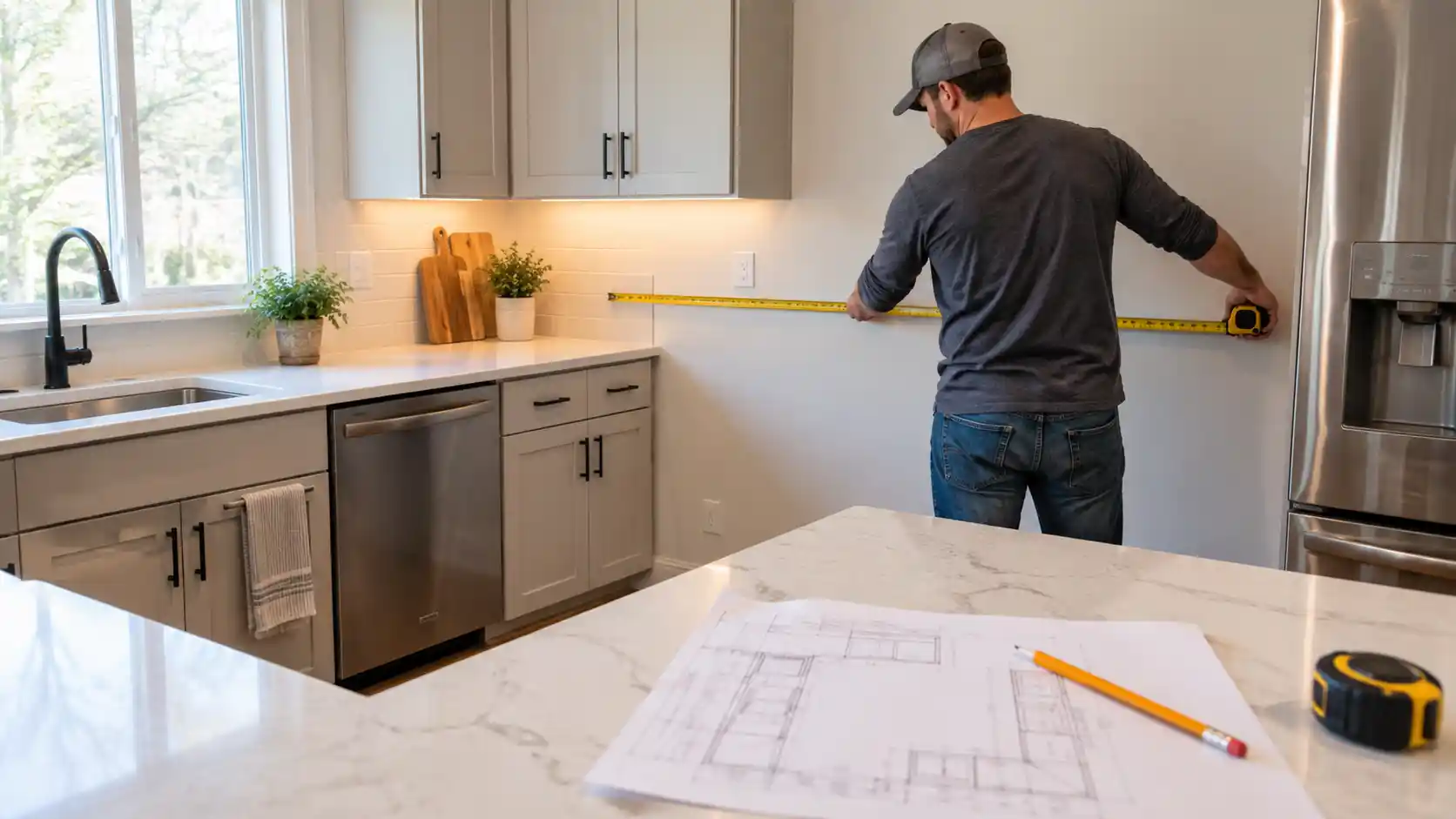
The project may also require new hinges, drawer fronts, hardware, or finishing work to match the existing cabinet boxes. Accurate measurements are essential because replacement doors must fit the existing openings.
When New Cabinets Are a Better Option
New kitchen cabinets may be more suitable when the existing boxes have water damage, poor construction, inadequate storage, or significant wear.
Complete replacement also provides greater flexibility to change the kitchen layout, add drawers, improve accessibility, or accommodate different appliances.
Before planning a replacement, learning how to measure a kitchen for new cabinets can help you understand the dimensions and clearances that affect cabinet installation.
Compare the Total Cost
Door replacement generally involves fewer materials than complete cabinet installation, but the final cost depends on door sizes, materials, finishes, hinges, labor, and necessary repairs.
If the existing cabinet boxes need extensive work, replacing the entire cabinetry may provide better long-term value. Compare detailed estimates for both options before deciding.
Important Factors to Consider Before Choosing Cabinet Fronts
Selecting cabinet doors requires balancing appearance with practical needs. These factors can help narrow down your options.
Match the Style to Your Kitchen
Choose a door profile that complements the home’s overall design. Shaker and slab doors are versatile options, while raised panels are often better suited to traditional interiors.
Consider how the cabinet doors will look alongside countertops, backsplash materials, flooring, and hardware rather than evaluating each element separately.
Consider Cleaning and Maintenance
Smooth cabinet doors are generally easier to clean because they have fewer grooves. Detailed door profiles may collect more dust and cooking residue, especially near preparation areas.
Finish quality also matters. Some darker, glossy surfaces show fingerprints more readily than lighter or textured finishes.
Check Durability and Kitchen Conditions
Cabinets near sinks, dishwashers, and ovens experience different moisture and temperature conditions. Select materials and finishes suitable for these areas, and follow manufacturer recommendations for installation and maintenance.
Review Measurements and Hardware
Door dimensions, hinge placement, and handle clearance affect daily operation. Large doors may require additional hinge support, while nearby walls and appliances can restrict how far a door opens. Professional measurements help identify these issues before cabinets are ordered or installed.
Find Kitchen Cabinet Doors and Fronts in Orland Park, IL
Choosing kitchen cabinet doors and fronts is easier when you can compare actual materials, profiles, and finishes before making a decision.
At Kitchen Cabinet Design, we help homeowners in Orland Park, IL, and surrounding communities select kitchen cabinets that fit their style, storage needs, and budget. Our showroom features different cabinet styles, colors, and configurations to help you compare available options.
Our team provides kitchen cabinet design assistance, measurements, and professional installation services. Whether you’re planning a complete kitchen renovation or exploring new cabinetry, we can help you choose a practical design that works with your space.
Final Thoughts
The right kitchen cabinet doors and fronts should complement your home’s style while meeting your needs for durability, maintenance, and functionality. Shaker, slab, raised panel, and recessed panel doors each offer different design advantages, while materials and finishes determine how the cabinetry performs over time.
Before making a final choice, compare physical samples, review cabinet construction, and consider the condition of your existing cabinetry. These steps can help you select cabinet fronts that look good and work well for everyday use.
Frequently Asked Questions
What is the most popular kitchen cabinet door style?
Shaker doors are a widely used choice because their simple design works with traditional, transitional, and modern kitchens. Slab doors are also popular for contemporary cabinetry.
What is the difference between kitchen cabinet doors and drawer fronts?
Cabinet doors are hinged panels that swing open, while drawer fronts are attached to sliding drawers. Both create the visible exterior of the cabinetry.
What is the best material for kitchen cabinet doors?
Solid wood is suitable for natural grain and refinishing, while MDF works well for smooth painted finishes. Laminate and veneer are also practical options depending on the desired appearance and construction quality.
Are custom kitchen cabinet doors more expensive?
Custom doors generally cost more than standard options because they may require specialized sizing, materials, finishes, or manufacturing.
Should kitchen cabinet doors and drawer fronts match?
They should coordinate in color, finish, and overall style, but they don’t always need identical profiles. Shaker doors paired with slab drawer fronts are one common combination.