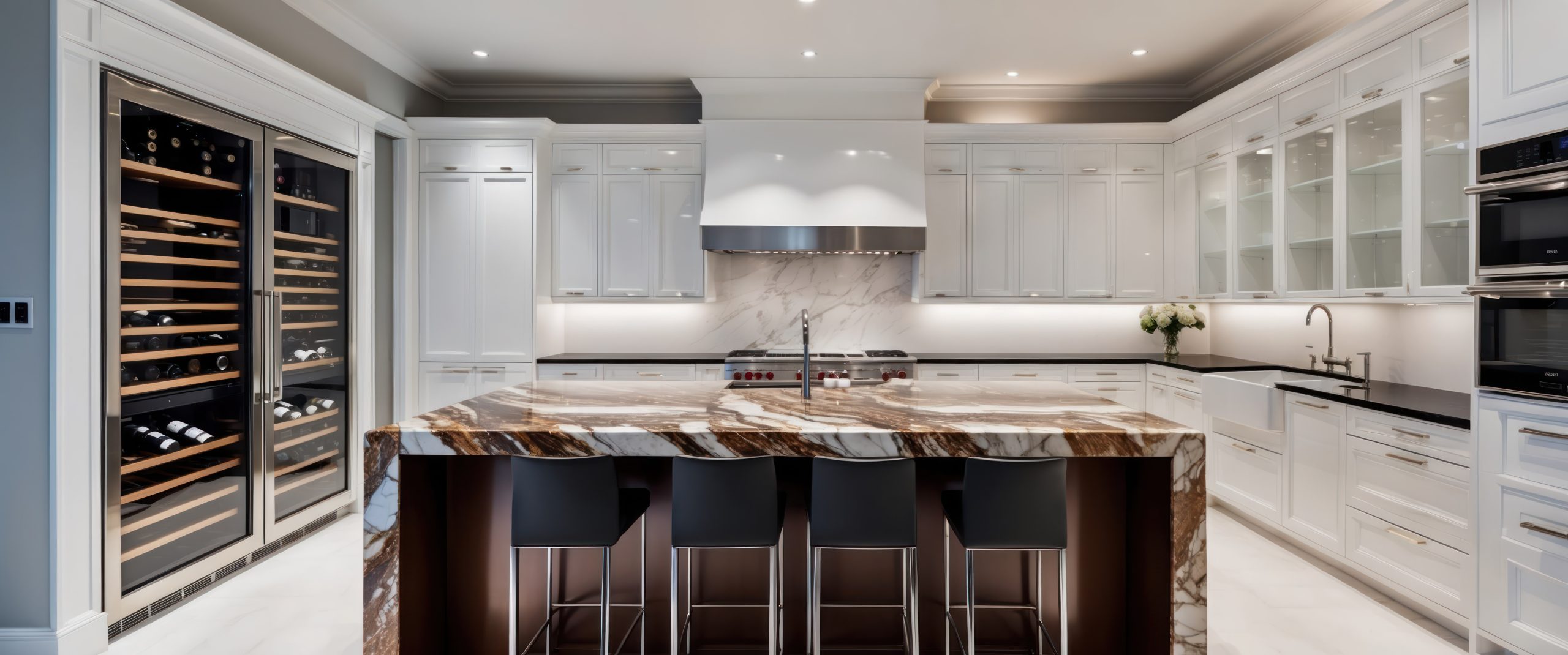
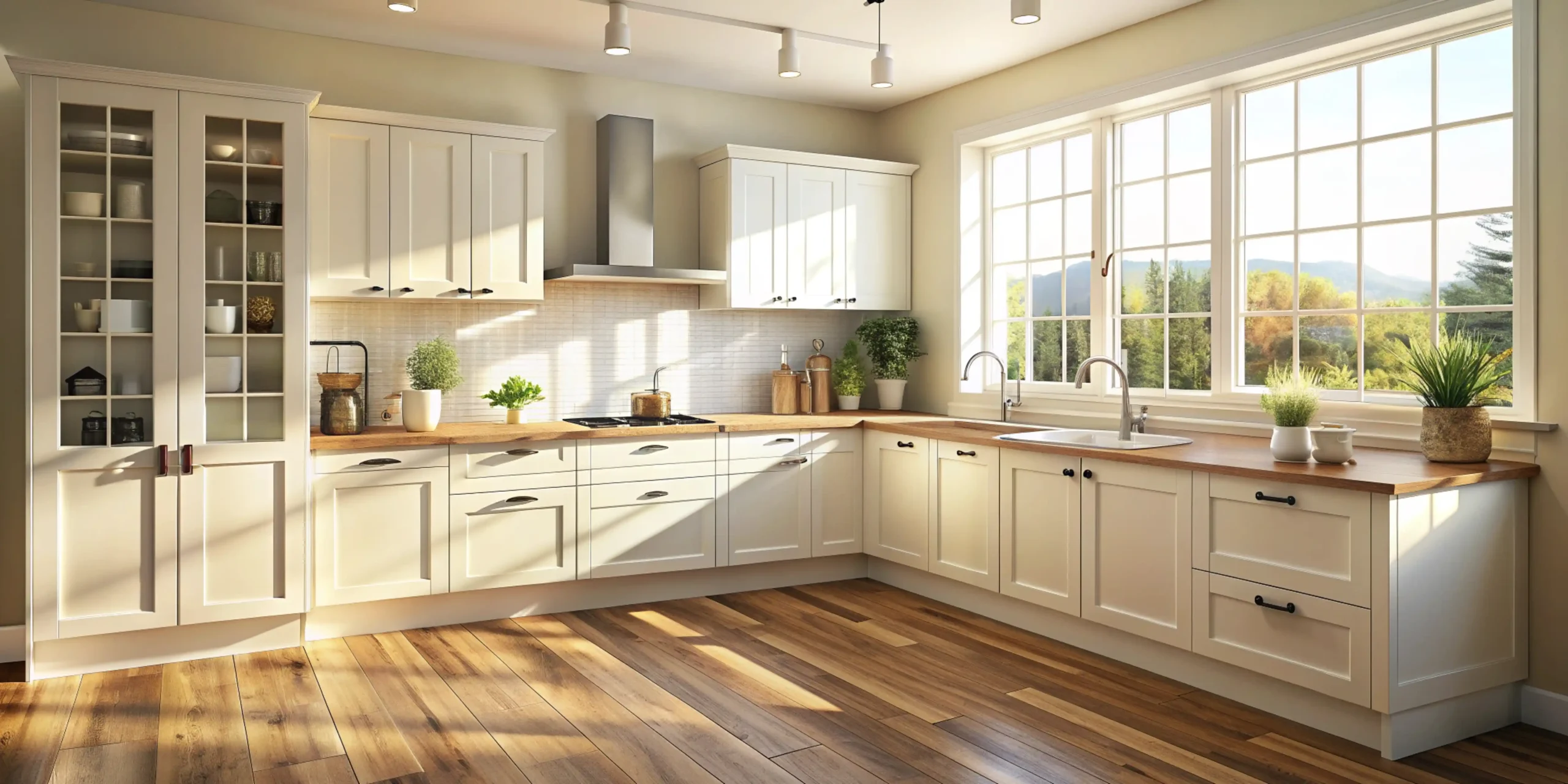
Choosing a kitchen cabinet color is easier when you consider the whole room. Black cabinets may look striking in an inspiration photo but feel different beside your existing floor. A sage green finish might seem neutral in the showroom, then reveal a stronger gray or yellow undertone at home.
The goal is to choose cabinet colors that work with your surfaces, lighting, and layout. At Kitchen Cabinet Design, we help homeowners coordinate cabinet selections with the rest of their kitchen, so individual choices come together in a complete design.
This guide helps Illinois homeowners compare black, green, and blue kitchen cabinets, plan two-tone combinations, and check the details before ordering.
How to Choose Kitchen Cabinet Colors That Work Together
Start by identifying what will stay in your kitchen. If you’re keeping a beige tile floor, a brown granite countertop, or a patterned backsplash, include those materials in your color decisions from the beginning. Choosing cabinets separately can leave you trying to reconcile finishes that compete with one another.
Next, compare undertones, the subtle colors beneath the main shade. A white finish may lean creamy or gray, while a green may appear more yellow, blue, or muted. You don’t need every surface to share an identical undertone, but you should compare them together to decide whether the contrast feels intentional.
Finally, choose how much attention you want the cabinets to attract. A soft cabinet color close to the wall color creates a quieter backdrop. A darker finish against pale walls makes the cabinet layout more prominent.
| Cabinet color | What it brings to the design | Combinations to explore | What to check |
|---|---|---|---|
| Black | Strong contrast and defined cabinet shapes | Warm wood, soft white, cream | How dark cabinet runs look under your lighting |
| Sage green | Subtle color with a muted appearance | Cream, light wood, warm neutrals | Whether the sample leans gray, yellow, or blue |
| Olive or deep green | Earthy warmth or richer color | Natural wood, pale countertops | Compatibility with flooring and stone undertones |
| Blue | A soft accent or a strong focal point | White, wood, restrained neutrals | Whether the blue reads cool, gray, or nearly black |
| Two-tone | Contrast between selected cabinet areas | Painted and wood finishes, light and dark colors | Where colors begin, end, and meet |
Use these combinations as starting points. The actual cabinet finish and surrounding materials should guide your final selection.
1. Black Kitchen Cabinets: Pairing Contrast with Warmth
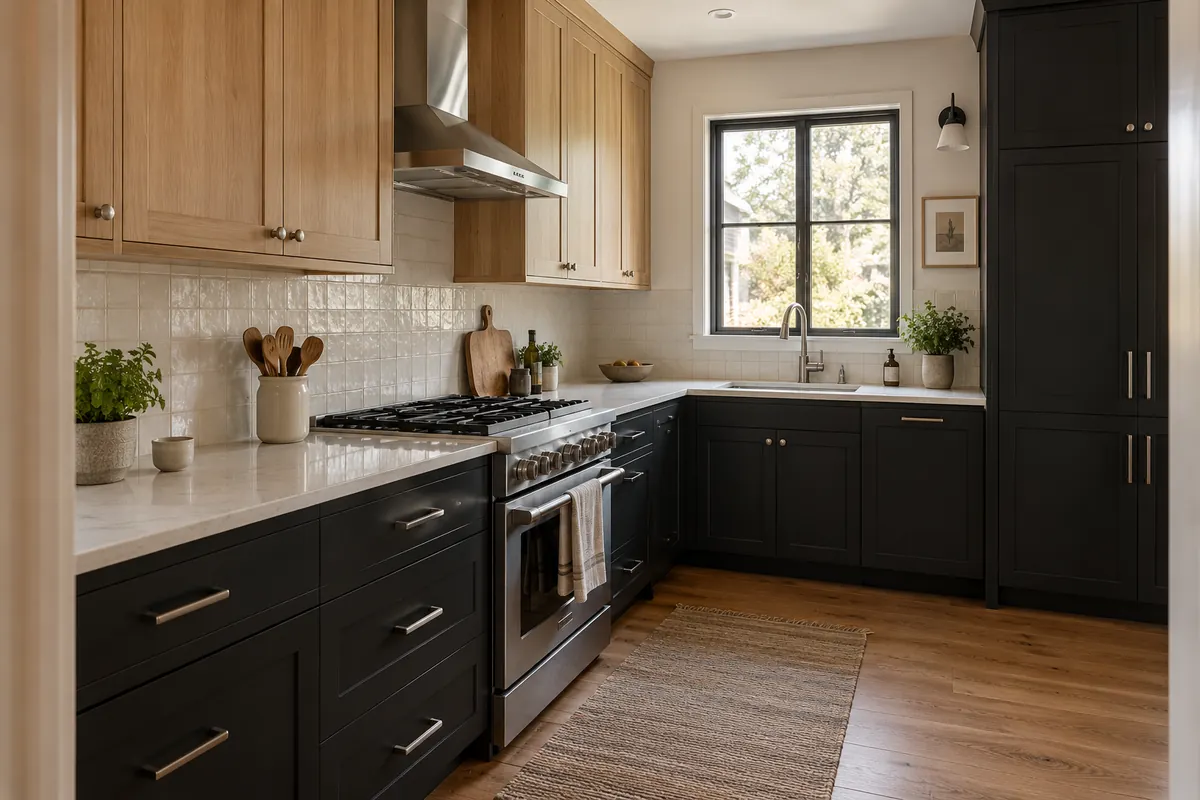
Black kitchen cabinets create a strong visual outline, making door profiles, hardware, and surrounding surfaces more noticeable. They can suit several cabinet styles, from simple flat panels to framed Shaker doors. The overall effect depends on the materials you place around them.
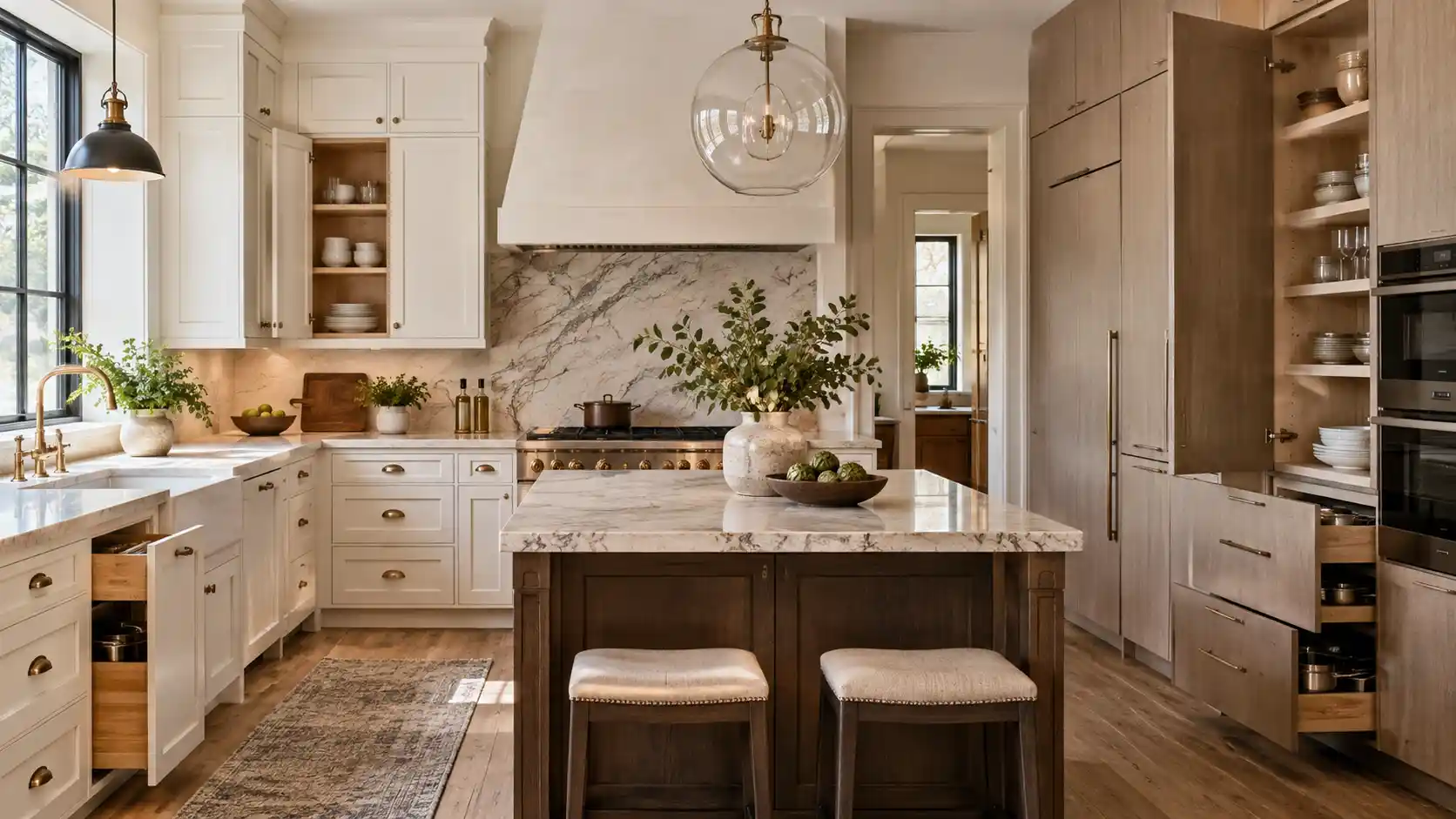
For a warmer palette, compare black cabinets with natural wood and a cream or soft white countertop. For a sharper contrast, consider a cleaner white surface and a restrained backsplash. In either case, check the countertop sample closely: its background color and veining can change how the black finish appears.
You can also adjust how much black you use. An island or a run of base cabinets introduces the color without extending it across every wall. If you prefer a full kitchen of black kitchen cabinets, review the entire elevation, including tall pantry cabinets and refrigerator surrounds.
Hardware can either stand out or blend in. Brass tones add a warm accent, brushed nickel provides a lighter metallic detail, and black hardware creates a more subdued appearance. Compare the actual finishes together rather than relying on their product names.
Before choosing black kitchen cupboards, ask about the specific finish’s care instructions. Fingerprints, dust, and cleaning marks can show differently depending on the coating, sheen, texture, and lighting.
2. Green Kitchen Cabinets: Choosing Between Sage, Olive, and Deep Green
Green kitchen cabinets cover a wide range of shades. A pale, gray-green finish produces a different result from a yellow-toned olive or a deep forest green. Narrowing down the shade is more useful than deciding on “green” alone.
Bring green samples beside your countertop and flooring early in the process. A combination that looks coordinated against one wood finish may feel less comfortable beside another.
Sage Green Kitchen Cabinets with Cream and Light Wood
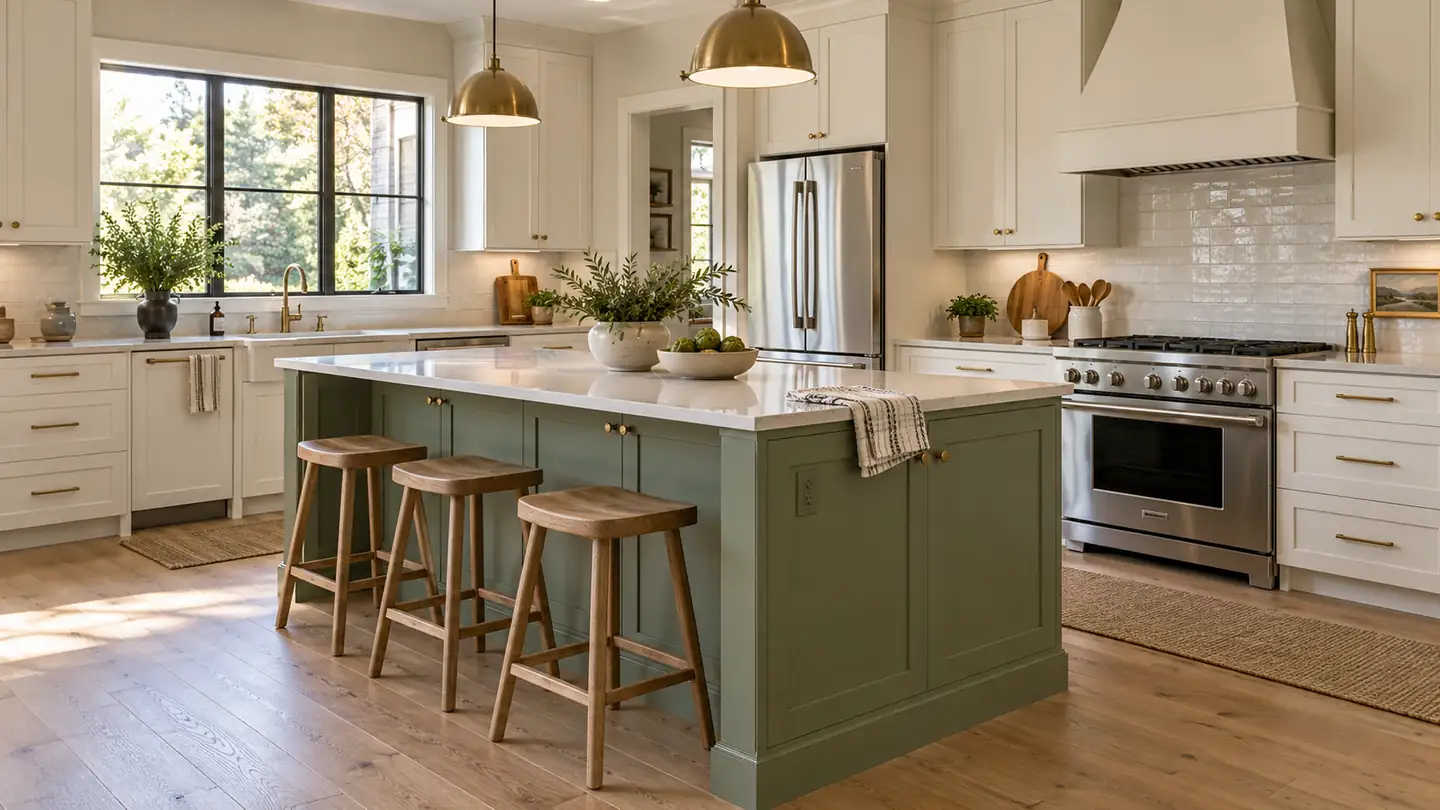
Sage green kitchen cabinets offer a way to introduce color without choosing a highly saturated finish. Depending on the sample, sage may read as a soft green, a gray-green, or a warmer earthy shade.
Cream cabinets, light wood, and pale countertops are useful materials to compare with sage. However, a creamy white can look noticeably yellow beside some cooler sage finishes. Place the samples together before committing to either one.
For a two-tone design, consider sage base cabinets with light upper cabinets, or a sage island with a neutral perimeter. Keep the remaining surfaces relatively calm if you want the cabinet color to remain the main feature.
Olive and Deep Green Cabinets with Wood and Pale Countertops
Olive green often has a warmer, yellow or brown influence, while deep green may lean toward blue or black. Both can pair with wood, but the wood’s stain and grain influence the result.
If your flooring has a pronounced orange or red cast, compare it carefully with the green you’re considering. You may prefer a different green sample or a quieter countertop to bring the materials together.
Deep green kitchen cupboards can create a strong focal point on an island or tall cabinet bank. For a full green kitchen, review how the finish looks across larger cabinet areas, including end panels and trim.
3. Blue Kitchen Cabinets: From Soft Blue to Navy
Blue kitchen cabinets can provide a gentle color shift or a dramatic contrast. Muted blues often appear softer beside natural wood and pale surfaces, while navy makes a stronger distinction against white or cream.
Start with your existing neutrals. A blue-gray cabinet finish may work comfortably with some gray countertops but make a warm beige surface appear more pronounced. Neither effect is automatically wrong; the question is whether you like the materials together.
Navy can work as an island color, on base cabinets, or throughout the kitchen. If you’re considering it for tall cabinets, look at the full cabinet arrangement rather than judging a single door sample. A large navy pantry bank will have a different visual presence from a small island.
Our blue kitchen cabinet options provide a starting point for exploring the look. Confirm the available shade, door style, and coordinating components for the cabinet line you select.
4. Two-Tone Kitchen Cabinets: Where Each Color Should Go
Two-tone kitchen cabinets combine two cabinet colors or finishes in one kitchen. That could mean light upper cabinets with dark base cabinets, a contrasting island, or painted cabinetry paired with wood.
The strongest starting point is the layout. Choose a clear reason for each color change, such as separating the island from the perimeter or distinguishing a complete cabinet run. Switching colors between unrelated individual cabinets can make the design feel fragmented.
Light Upper Cabinets and Darker Base Cabinets
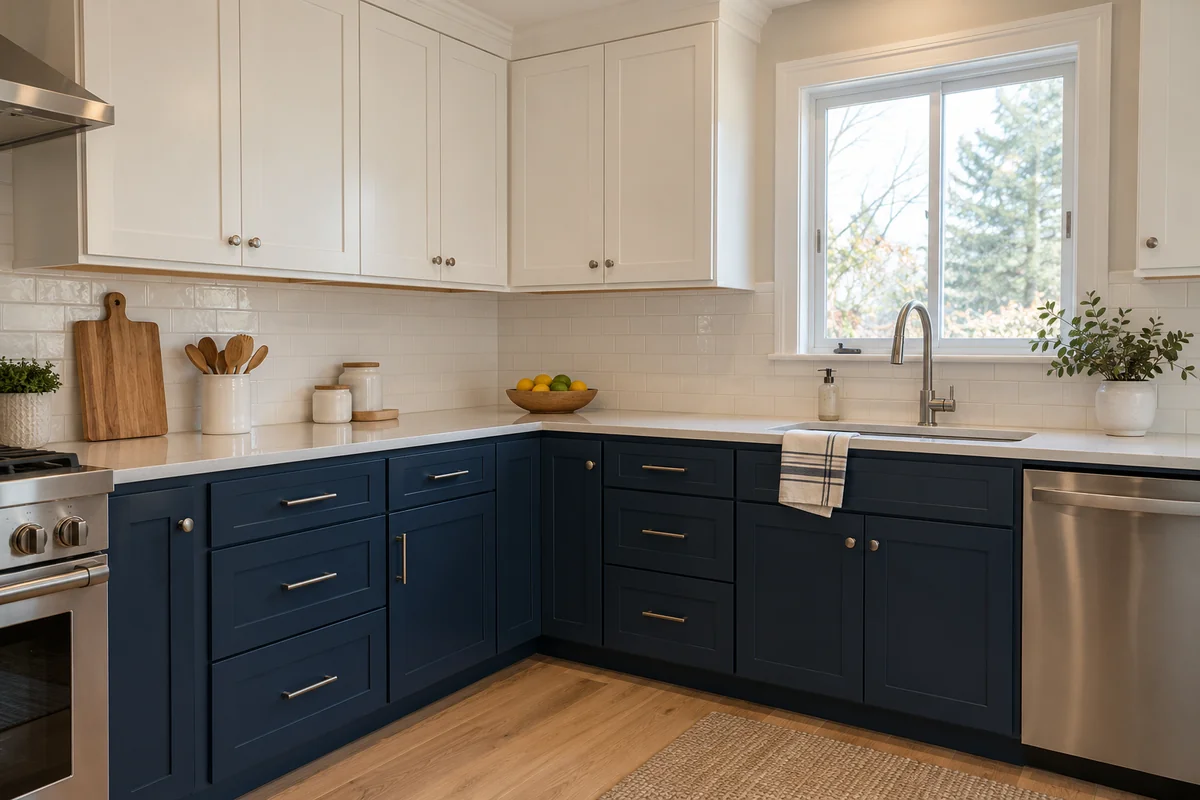
Light upper cabinets with darker base cabinets create contrast while keeping the upper part of the room visually lighter. This arrangement is worth exploring if you want black, green, or navy cabinets without using the darker finish on every wall.
Tall cabinets need particular attention because they extend through both color zones. Decide whether a pantry or refrigerator surround should follow the upper color, the base color, or a separate coordinated finish.
Review corners and exposed ends as well. A drawing that shows each cabinet’s finish can reveal awkward transitions before the order is placed.
A Contrasting Island with Coordinated Perimeter Cabinets
A contrasting island gives the second color a clear boundary. For example, you might choose cream perimeter cabinets with a green island, or light wood cabinets with a black island.
Consider the island from adjoining rooms, particularly in an open layout. Its finished back and side panels may be more visible than its cabinet doors, so include those surfaces in your selection.
You can maintain continuity with matching hardware or a shared countertop material. If you choose different countertops, compare both surfaces with both cabinet finishes to make sure the complete palette works together.
Painted Cabinets Paired with Wood Tones
Two-tone cabinets don’t require two paint colors. Wood can provide the second finish, adding visible grain and a different texture to the room.
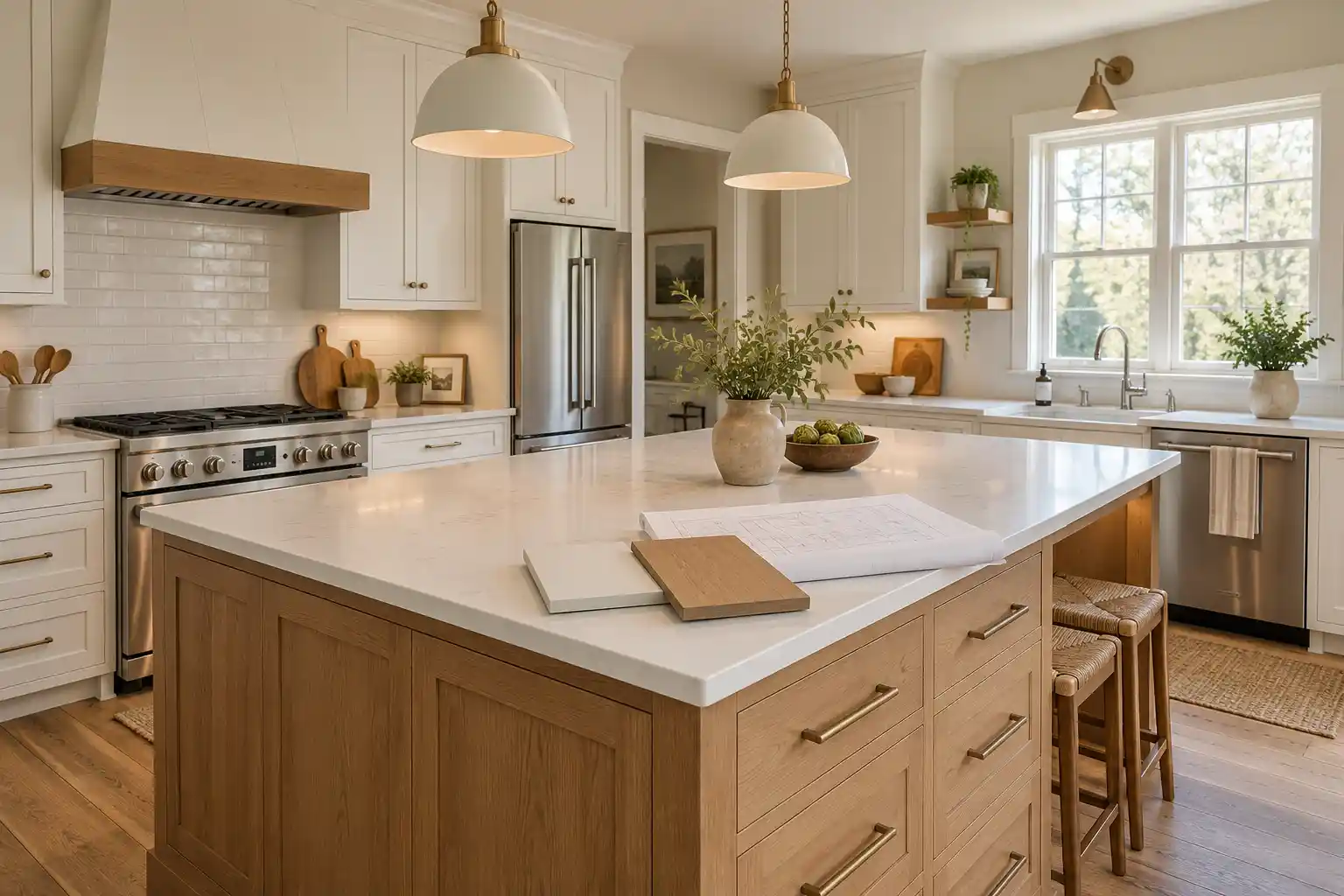
Black with light wood, muted blue with oak, and green with a coordinated wood finish are combinations worth comparing. Check the actual stain sample, since “natural” and “oak” can describe finishes with noticeably different appearances.
Also confirm where matching wood components are available. An island back, decorative panel, filler, and cabinet door may require different parts, and all should be included in the design review.
Kitchen Cabinet Color Combinations to Compare
A useful combination accounts for more than cabinet doors. Use the table below to build a shortlist, then compare physical samples before making your final choice.
| Cabinet combination | Countertop and backsplash direction | Hardware to compare | Detail to check |
|---|---|---|---|
| Black and warm wood | Pale countertop with a simple backsplash | Brass, nickel, or black | Whether the wood stain works with existing flooring |
| Black and soft white | Light stone or quartz with restrained pattern | Brushed nickel or warm metallic finishes | Whether the white looks creamy or cool beside the countertop |
| Sage green and cream | Soft white or cream surfaces | Brushed brass or nickel | Whether the cream becomes too yellow beside the sage |
| Olive green and light oak | Warm neutral countertop and understated tile | Brass or darker metal finishes | Compatibility between the olive and oak undertones |
| Deep green and warm white | Pale countertop with selected veining | Brass, nickel, or coordinated dark hardware | How the green appears under evening lighting |
| Navy and white | White or softly patterned countertop | Nickel, brass, or black | Whether the navy and countertop share a pleasing contrast |
| Muted blue and natural wood | Pale neutral surfaces | Brushed nickel or subdued brass | Whether the blue appears too gray beside the wood |
If your countertop has a strong pattern, let that influence how much variation you introduce elsewhere. You may prefer quieter cabinet finishes and a simpler backsplash so the room has a clear focal point.
When comparing countertop options, consider both appearance and the material’s care requirements. A coordinated kitchen should also suit how you cook, clean, and use the space.
Plan Your Cabinet Color Combination with Kitchen Cabinet Design
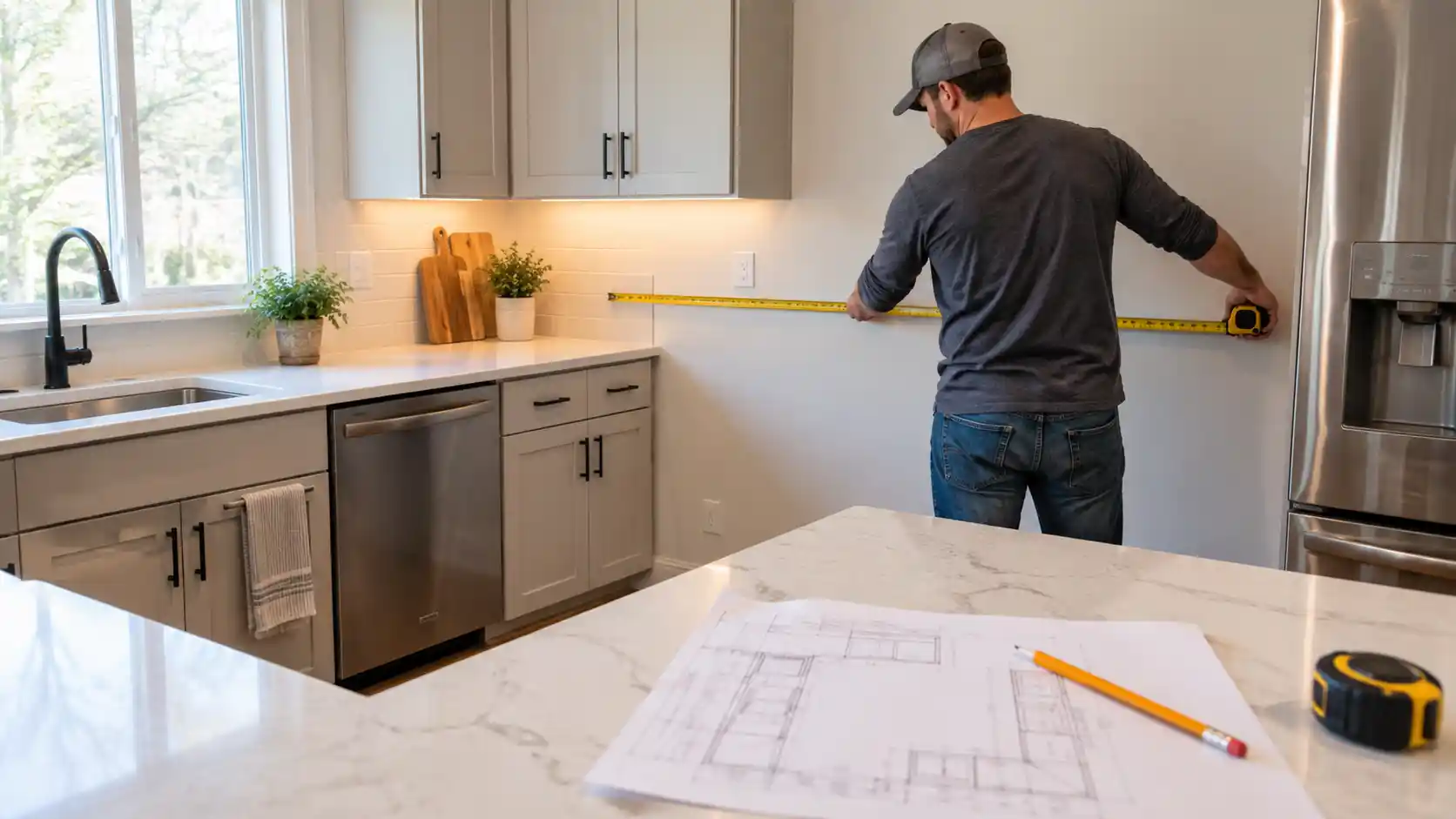
Bring a few favorite combinations to your design consultation, along with photos of your kitchen and samples of any surfaces you plan to keep. Preliminary measurements, appliance model information, and a short storage wish list will help connect your color preferences to a practical cabinet plan.
At Kitchen Cabinet Design, we can help you compare cabinet selections, coordinate finishes, and plan the next steps for your kitchen. If you’re an Illinois homeowner considering new cabinets, request a design consultation to review your ideas, available options, and project location with our team.
Frequently Asked Questions
Should upper or lower cabinets be darker in a two-tone kitchen?
Darker base cabinets with lighter upper cabinets are a common arrangement, but they aren’t a requirement. A contrasting island or a separate tall cabinet bank can also provide a clear place for the darker finish. Choose placement based on your layout, lighting, and preferred appearance.
Can colored kitchen cabinets work in a small kitchen?
Yes. Consider the amount and placement of color alongside the room’s lighting and surrounding surfaces. A colored island or base cabinets with lighter uppers may suit your preferences, while a single coordinated cabinet color can create a more continuous appearance.
How to Choose the Right Color for Cabinets?
Start with the countertops, flooring, and backsplash you plan to keep, then compare cabinet finishes that complement their undertones. Consider whether you want a softer look with sage green or muted blue, or stronger contrast with black or navy. View physical cabinet samples in your kitchen during daylight and under evening lighting before making your final choice.
Where to Find the Best Kitchen Cabinet Color Options?
A cabinet showroom lets you compare physical door samples, finishes, and styles together. At Kitchen Cabinet Design, we help Illinois homeowners explore kitchen cabinet options and coordinate their selections with countertops and other surfaces. Ask which colors are available in your preferred cabinet line, including matching panels, fillers, and trim.
What Color Combinations Should I Choose for Two-tone Cabinets?
Consider sage green and cream for soft contrast, navy and white for a more defined look, or black and natural wood for warmth and depth. You can place the darker color on base cabinets or use it on an island with a lighter perimeter. Compare both finishes with your countertops and flooring, and plan where each color starts and ends.